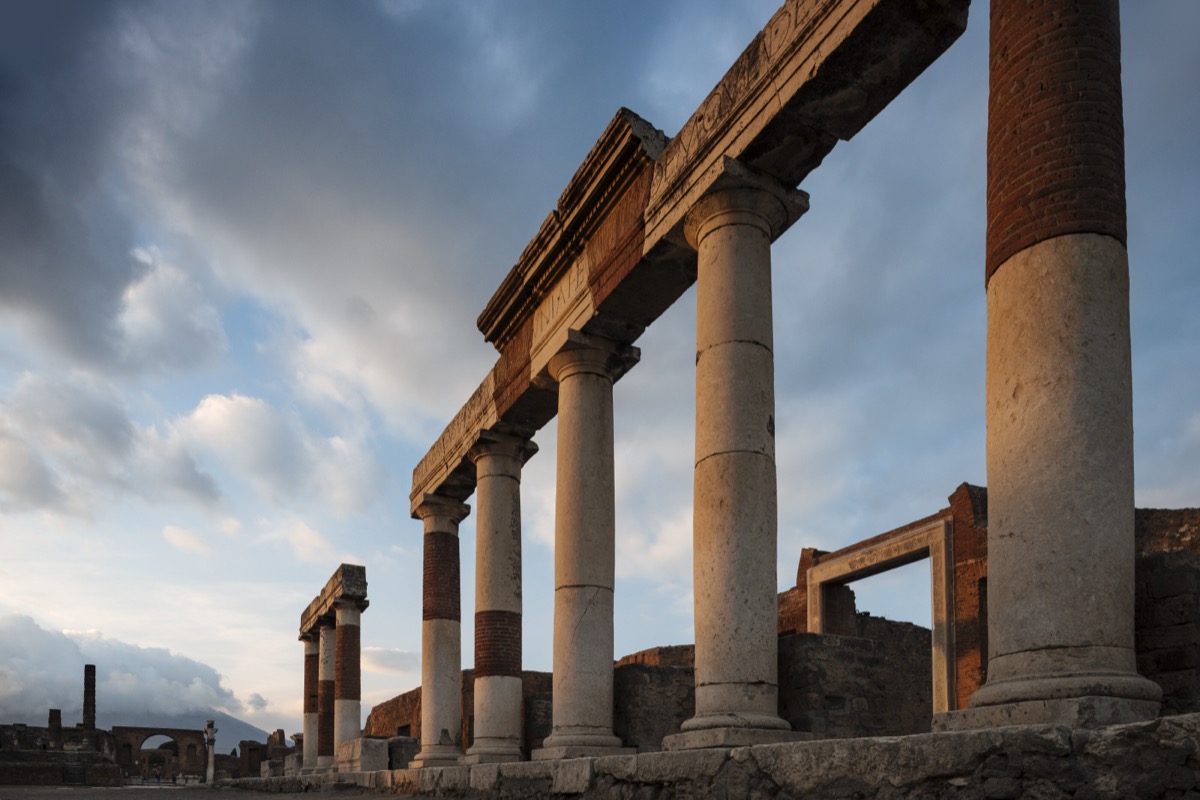
Best Things To See At Pompeii Ruins: Top 15 Must-Visit Attractions
Best Things To See At Pompeii Ruins: Top 15 Must-Visit Attractions. Discover practical tips for your visit. visitor guide, tickets, history of Pompeii
Discover the unmissable highlights of Pompeii with this expertly curated guide to the top 15 attractions. From haunting plaster casts to lavish villas, you'll know exactly where to spend your precious time in this vast archaeological site.
The Forum: Heart of ancient Pompeii
The Forum served as Pompeii's political, commercial, and religious center. This rectangular plaza, measuring 157 by 38 meters, buzzes with the echoes of ancient life.
What you'll see
- Colonnade: Impressive two-story portico (partially standing)
- Temple of Jupiter: Dominating the north end with Vesuvius backdrop
- Basilica: Law courts and business center (southwest corner)
- Macellum: Ancient food market with circular fish market
- Public buildings: Municipal offices and voting halls
Visitor tips
- Best photos: From the Temple of Jupiter steps
- Time needed: 30-45 minutes
- Crowds: Busiest 10 AM - 2 PM
- Don't miss: Original marble floor sections
Villa of the Mysteries: Enigmatic frescoes
This suburban villa contains the finest fresco cycle in Pompeii, depicting mysterious Dionysian initiation rites across vivid red walls.
Highlights
- Fresco room: 60 life-sized figures in narrative sequence
- Pompeian red: Signature cinnabar pigment perfectly preserved
- Mystery cult: Debated religious or wedding ceremony scenes
- Architecture: Mix of residential and agricultural spaces
Practical info
- Location: 400m from Porta Ercolano (northwest)
- Walking time: 15 minutes from Forum
- Best time: Early morning or late afternoon
- Photography: Allowed without flash
House of the Faun: Pompeii's grandest residence
Covering an entire city block (3,000 square meters), this mansion showcases the wealth of Pompeii's elite.
Must-see features
- Dancing Faun: Bronze statue copy in impluvium (original in Naples Museum)
- Alexander Mosaic: Epic battle scene replica (original moved)
- Two atriums: Rare double entrance design
- Four dining rooms: Seasonal triclinia for different weather
- Private baths: Luxury uncommon in private homes
Visit strategy
- Enter from Via della Fortuna
- Allow 20-30 minutes
- Notice intricate floor mosaics throughout
- Peristyle garden offers shade
Pompeii Amphitheater: Gladiatorial arena
Built in 70 BC, this is the world's oldest surviving Roman amphitheater, predating Rome's Colosseum by 150 years.
Key features
- Capacity: 20,000 spectators
- Perfect acoustics: Test from arena center
- Underground areas: Gladiator preparation rooms
- Original features: Stone seats, entrance arches
- Historic riots: Site of famous AD 59 brawl
Visitor experience
- Location: Eastern edge via Piazza Anfiteatro entrance
- Less crowded: Visit early or late
- Photo tip: Climb upper tiers for panoramic views
- Imagination spot: Stand in arena center
Garden of the Fugitives: Haunting memorial
This emotional site preserves 13 plaster casts of Vesuvius victims in their final moments.
What to expect
- Plaster casts: Family group including children
- Original positions: Exactly where they fell
- Glass enclosure: Protected viewing area
- Interpretation: Multilingual information panels
- Atmosphere: Respectful, contemplative
Visiting notes
- Location: Near Nuceria Gate (southeast)
- Approach: Through ancient orchard
- Time needed: 10-15 minutes
- Behavior: Maintain respectful silence
Stabian Baths: Roman bathing complex
Pompeii's oldest public baths (2nd century BC) demonstrate sophisticated Roman hygiene and social customs.
Bath sections
- Apodyterium: Changing rooms with clothing niches
- Tepidarium: Warm room with decorated ceiling
- Caldarium: Hot room with marble basin
- Frigidarium: Cold plunge pool
- Palaestra: Exercise courtyard with pool
Architectural highlights
- Stucco decorations intact
- Hypocaust heating system visible
- Separate men's and women's sections
- Original bronze braziers
House of the Vettii: Merchant luxury
Recently reopened after 20-year restoration, this house belonged to wealthy wine merchants.
Extraordinary features
- Frescoes: Mythological scenes in every room
- Priapus fresco: Famous entrance guardian
- Cupids frieze: Delightful working cupids scenes
- Peristyle garden: Reconstructed with original plants
- Lararium: Elaborate household shrine
Visitor information
- Restricted entry: Limited group size
- No photos: In some decorated rooms
- Highlights: 4th Style painting examples
- Time slot: Book specific entry time
Lupanar: Ancient brothel
Pompeii's most famous brothel provides unique insights into Roman sexuality and lower-class life.
What you'll find
- Stone beds: Five small rooms with built-in beds
- Erotic frescoes: Menu of services above each door
- Graffiti: Client comments in multiple languages
- Architecture: Two floors (upper class upstairs)
- Location: Central position near Forum
Visiting reality
- Very cramped: Maximum 8-10 people inside
- Queue likely: Popular with tour groups
- Quick visit: 5-10 minutes sufficient
- Best times: Very early or late
Thermopolium of Asellina: Ancient fast food
This recently excavated snack bar reveals colorful frescoes and food serving methods.
Fascinating details
- Counter: Embedded dolia (storage jars)
- Frescoes: Food images including rooster and ducks
- Menu remains: Traces of ancient food
- Back rooms: Living quarters visible
- Still life: Rare intact food painting
Modern parallels
- Functions like today's food counter
- Take-away service for busy Romans
- Hot food kept in jars
- Wine served with water
House of the Tragic Poet: Mosaic fame
Though modest in size, this house gained fame for its "Cave Canem" (Beware of Dog) mosaic.
Notable elements
- Entry mosaic: Original dog warning intact
- Atrium: Classic Roman layout
- Mythological frescoes: Scenes from Greek tragedy
- Lararium: Well-preserved household shrine
- Literary connection: Inspired Bulwer-Lytton's novel
Photography note
The dog mosaic attracts crowds; visit early for clear photos.
Temple of Apollo: Religious grandeur
One of Pompeii's oldest sanctuaries showcases Greek influence on Roman religion.
Architectural elements
- Portico: 48 Corinthian columns originally
- Bronze statues: Apollo and Diana copies
- Sundial: Ancient time-keeping device
- Altar: Original sacrificial stone
- Sacred area: Separated from Forum
Cultural significance
- Pre-Roman foundation (575 BC)
- Blend of Greek and Roman styles
- Active cult site until eruption
Bakery of Modestus: Working life
This commercial bakery with intact millstones and ovens illustrates daily bread production.
Industrial features
- Millstones: Four lava stone mills
- Oven: Large commercial baking oven
- Grain storage: Upper floor areas
- Shop front: Direct street sales
- Animal power: Donkey mill operation
Insights gained
- Bread was Pompeii's staple food
- 81 bakeries served the city
- Carbonized loaves found here
Large Theater: Entertainment venue
This 5,000-seat theater hosted comedies, tragedies, and musical performances.
Architectural marvel
- Acoustics: Still functional for performances
- Seating: Social hierarchy visible in sections
- Orchestra: Marble-paved performance area
- Stage building: Elaborate architectural backdrop
- Restoration: Used for summer performances
Viewing tip
Climb to top tiers for best site overview and photos.
House of Menander: Aristocratic splendor
This vast mansion belonged to Pompeii's elite, featuring exquisite decorations and private bath suite.
Treasures within
- Silver service: 118 pieces found (now in Naples)
- Private baths: Complete bathing complex
- Trojan War frescoes: Detailed narrative cycle
- Servants' quarters: Rare glimpse of slave life
- Agricultural areas: Working farm sections
Limited access
Check current opening status; sometimes restricted.
Via dell'Abbondanza: Main street life
Pompeii's principal commercial thoroughfare preserves shops, bars, and ancient advertising.
Street features
- Stepping stones: Pedestrian crossings intact
- Wheel ruts: Deep grooves from carts
- Shop signs: Pictures for illiterate customers
- Fountains: Public water access points
- Graffiti: Political slogans and announcements
Walking strategy
- Start from Forum end
- Notice building numbers
- Peek into open shops
- 30-45 minutes end to end
Practical tips for seeing everything
Time management
- Minimum time: 4 hours for highlights
- Comfortable pace: 6 hours with breaks
- Comprehensive tour: Full day (8 hours)
- Multiple visits: Consider 3-day pass
Route planning
- Start early at less crowded entrance
- Visit Villa of Mysteries first (furthest point)
- Work back toward Forum
- Save covered areas for midday heat
- End at Amphitheater area
Avoiding crowds
- Skip Villa of Mysteries if cruise ship day
- Visit popular sites during lunch (12-2 PM)
- Explore residential areas when Forum packed
- Use Amphitheater entrance
Essential preparation
- Download offline map
- Bring water and snacks
- Wear comfortable shoes
- Book guided tour for context
- Allow flexibility in schedule
Conclusion
Pompeii's best attractions offer windows into every aspect of Roman life, from grand public spaces to intimate domestic scenes. Prioritize the Forum, Villa of the Mysteries, and House of the Faun, then explore based on your interests. Whether fascinated by art, architecture, or daily life, these 15 sites ensure a meaningful encounter with the ancient world. Plan at least 4-6 hours, wear comfortable shoes, and prepare for an unforgettable journey through time.