Pompeii Italy guide
Pompeii Italy guide — ancient Pompeii tours. Discover ancient Pompeii tours with practical tips for your visit. visitor guide, tickets, history of Pompeii
Pompeii stands as humanity's most extraordinary archaeological time capsule, preserving an entire Roman city at the exact moment of its destruction in 79 AD when Mount Vesuvius erupted with catastrophic force, burying the thriving community under meters of volcanic ash and pumice. This remarkable preservation creates unparalleled opportunities for modern visitors to walk ancient streets, enter Roman homes, and experience daily life from nearly two thousand years ago with detail and authenticity impossible at any other archaeological site worldwide.
The ancient city of Pompeii reveals intimate details of Roman civilization through perfectly preserved buildings, artwork, artifacts, and even the tragic human remains that tell stories of final moments when disaster struck this prosperous community of approximately 20,000 inhabitants. Modern archaeological techniques continue uncovering new discoveries while advanced preservation methods ensure this irreplaceable heritage remains accessible for future generations to study, appreciate, and learn from ancient Roman society's achievements and daily customs.
This comprehensive guide provides essential information for visiting Pompeii while exploring the archaeological site's major attractions, hidden treasures, and practical logistics that enable meaningful engagement with this unique window into ancient Roman life, from planning your visit and understanding historical context to discovering lesser-known areas and appreciating the ongoing archaeological work that continues revealing Pompeii's secrets.
Historical Context and the Catastrophic Eruption
Pre-Eruption Pompeii: A Thriving Roman City
Before Mount Vesuvius transformed Pompeii into history's most famous archaeological site, the city thrived as a prosperous Roman community benefiting from fertile volcanic soil, strategic location near the Bay of Naples, and integration into the Roman Empire's extensive trade networks.
Economic Prosperity and Urban Development
Pompeii's economy flourished through diverse activities including agriculture, wine production, textile manufacturing, and trade, creating wealth that supported sophisticated urban infrastructure and cultural development evident throughout the archaeological remains.
Agricultural Foundation and Wine Production
The fertile slopes of Vesuvius provided ideal conditions for agriculture, particularly viticulture, making Pompeii an important wine production center whose products reached markets throughout the Roman Empire.
Economic characteristics included:
- Extensive vineyard cultivation utilizing volcanic soil fertility for premium wine production
- Agricultural diversity including olive groves, fruit orchards, and vegetable gardens
- Food processing facilities including bakeries, oil presses, and garum production
- Trade connections linking Pompeii with Mediterranean markets and Roman provinces
- Wealthy merchant class investing profits in elaborate homes and public buildings
- Slave-based economy supporting agricultural and industrial production
Urban Infrastructure and Public Amenities
Pompeii's urban development reflected Roman engineering excellence through sophisticated water systems, paved streets, public buildings, and amenities that served citizens' daily needs while demonstrating civic pride and imperial connection.
Infrastructure elements included:
- Aqueduct system delivering fresh water through lead pipes to public fountains and private homes
- Paved streets with raised sidewalks and stepping stones for pedestrian crossing
- Public baths providing social gathering spaces and hygiene facilities
- Forum complex serving as commercial, political, and religious center
- Entertainment venues including amphitheater and theaters for gladiatorial games and performances
- Defensive walls and gates controlling access while demonstrating military architecture
The Eruption of Mount Vesuvius: August 24-25, 79 AD
The catastrophic eruption that destroyed Pompeii unfolded over approximately 24 hours, beginning with warning earthquakes before explosive volcanic activity buried the city under meters of pumice and ash, preserving it for nearly seventeen centuries.
Eruption Sequence and Destruction Timeline
Modern volcanological research combined with ancient eyewitness accounts from Pliny the Younger provides detailed understanding of the eruption sequence that destroyed Pompeii while creating conditions for extraordinary preservation.
Initial Explosive Phase and Pumice Fall
The eruption began around noon on August 24 with a massive explosive column ejecting pumice and ash high into the atmosphere before falling on Pompeii, accumulating rapidly while residents attempted escape or sought shelter.
Eruption phases included:
- Preliminary earthquakes warning of impending volcanic activity but largely ignored by residents
- Initial explosion creating eruption column reaching approximately 30 kilometers altitude
- Pumice fall accumulating at rates of 15-20 centimeters per hour in Pompeii
- Building collapse beginning as roofs failed under accumulated volcanic material weight
- Darkness descending as ash cloud blocked sunlight creating nighttime conditions
- Panic and evacuation attempts as residents recognized catastrophic danger
Pyroclastic Surges and Final Destruction
The eruption's deadliest phase occurred during the night and early morning of August 25 when pyroclastic surges of superheated gas and volcanic material swept through Pompeii, instantly killing remaining residents while sealing the city in protective volcanic deposits.
Final destruction elements included:
- First pyroclastic surge reaching Pompeii around 1:00 AM on August 25
- Temperatures exceeding 300°C instantly killing anyone exposed to surge clouds
- Multiple surge events burying city progressively deeper under volcanic deposits
- Final burial depth reaching 4-6 meters of compacted ash and pumice
- Complete sealing creating anaerobic conditions preserving organic materials
- Formation of protective layer preventing erosion and human disturbance for centuries
Rediscovery and Archaeological Evolution
Pompeii's rediscovery in 1748 initiated archaeological investigations that continue today, evolving from treasure hunting to scientific excavation while revealing unprecedented insights into Roman daily life and urban society.
Early Excavations and Treasure Hunting Era
Initial excavations focused on recovering valuable artifacts and artworks for royal collections, often causing damage to structures and contexts that modern archaeologists would carefully preserve and document.
Bourbon Period Excavations and Royal Interest
Spanish Bourbon rulers of Naples initiated Pompeii's excavation primarily to acquire classical artworks and treasures, establishing patterns of archaeological investigation while causing significant information loss through crude methods.
Early excavation characteristics included:
- Tunneling techniques following walls to locate valuable objects while ignoring architectural context
- Artifact removal without documentation destroying archaeological associations and information
- Focus on elite structures likely containing artworks while ignoring common buildings
- Limited preservation efforts leading to rapid deterioration of exposed structures
- Restricted access maintaining royal control over discoveries and preventing scholarly study
- Gradual recognition of site importance beyond treasure repository leading to improved methods
Scientific Archaeology and Modern Techniques
Contemporary archaeological approaches emphasize comprehensive documentation, interdisciplinary research, and conservation while utilizing advanced technologies to extract maximum information from Pompeii's remains without causing damage.
Modern archaeological methods include:
- Stratigraphic excavation preserving depositional sequences and archaeological contexts
- Digital documentation creating detailed 3D records of structures and artifacts
- Multidisciplinary analysis including volcanology, biology, and chemistry studies
- Conservation prioritization protecting exposed remains from environmental deterioration
- Public archaeology involving communities and visitors in research and preservation
- International collaboration bringing global expertise to Pompeii's investigation and protection
Major Archaeological Sites and Structures
The Forum Complex: Pompeii's Civic Heart
Pompeii's Forum served as the city's political, commercial, and religious center, surrounded by important public buildings that demonstrate Roman urban planning principles and civic organization while revealing daily activities of ancient urban life.
Forum Layout and Architectural Design
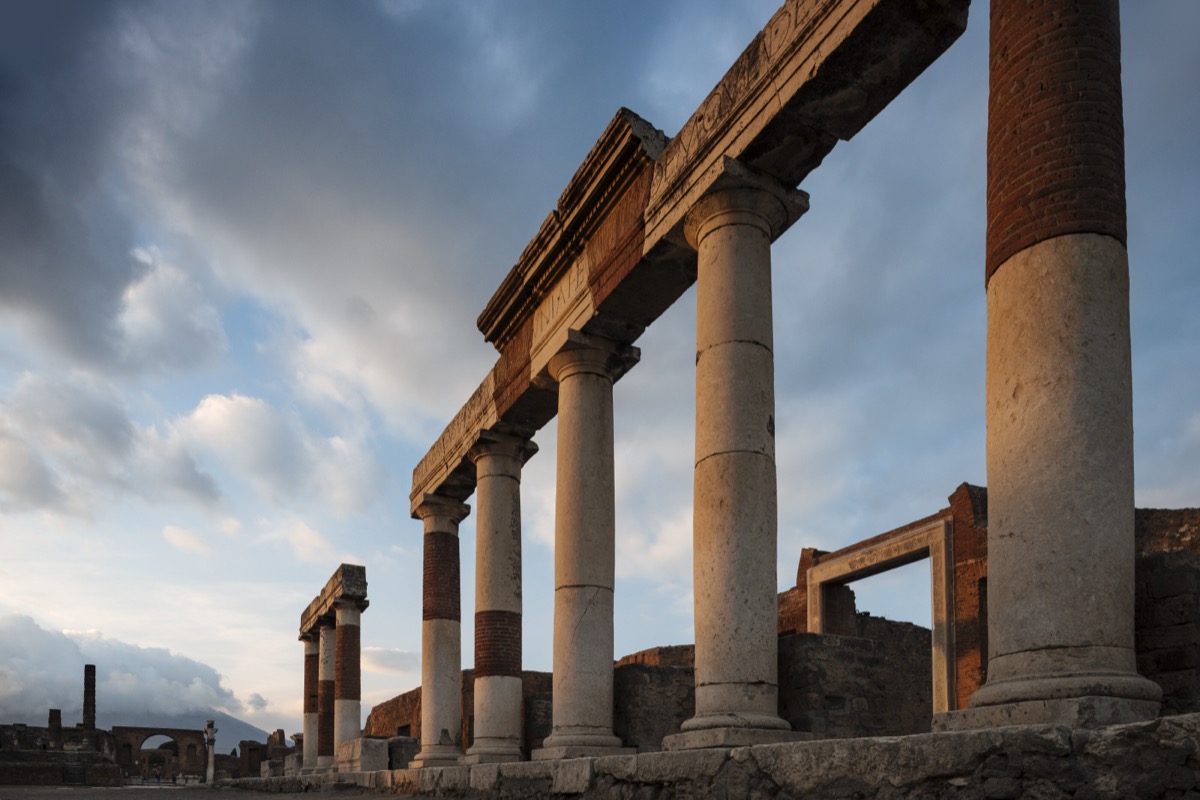
The rectangular Forum plaza created organized space for public gatherings, commercial activities, and religious ceremonies while impressive colonnades and surrounding buildings demonstrated Pompeii's prosperity and Roman cultural integration.
Central Plaza and Surrounding Colonnades
The Forum's open plaza provided flexible space for various activities while covered colonnades offered protected areas for business transactions and social interaction regardless of weather conditions.
Forum characteristics included:
- Large rectangular plaza measuring approximately 157 by 38 meters oriented north-south
- Two-story colonnades providing covered walkways and upper gallery spaces
- Limestone paving stones showing wear patterns from centuries of foot traffic
- Statue bases indicating locations of honorific monuments to emperors and local dignitaries
- Restricted vehicle access maintaining pedestrian space for civic activities
- Strategic location at intersection of major streets maximizing accessibility
Capitolium and Religious Architecture
The Capitolium temple dominated the Forum's northern end, dedicating worship to Jupiter, Juno, and Minerva while demonstrating Pompeii's integration into Roman state religion and imperial ideology.
Religious structures included:
- Elevated temple platform creating visual dominance and ceremonial importance
- Triple cella design accommodating worship of Capitoline Triad deities
- Decorative elements including painted stucco and architectural sculpture
- Altar remains showing evidence of animal sacrifice and ritual activities
- Treasury rooms storing religious objects and civic valuables
- Integration with imperial cult demonstrating political loyalty through religious architecture
Residential Architecture: Houses and Villas
Pompeii's residential buildings range from modest apartments to luxurious villas, providing comprehensive insights into Roman domestic life, social stratification, and architectural evolution while preserving decorative programs and household artifacts.
House of the Vettii: Merchant Wealth Display
This lavishly decorated residence belonged to wealthy freedmen merchants who used architectural grandeur and artistic decoration to demonstrate their economic success and cultural sophistication despite non-aristocratic origins.
Architectural Layout and Decorative Program
The House of the Vettii exemplifies Roman domestic architecture through its systematic organization around central courtyards while extensive fresco decoration creates immersive artistic environments throughout the residence.
Architectural features included:
- Traditional atrium design with impluvium collecting rainwater for household use
- Peristyle garden creating private outdoor space surrounded by decorated porticoes
- Reception rooms decorated with mythological frescoes demonstrating cultural knowledge
- Service areas including kitchen and latrine showing household functional organization
- Private quarters separating family spaces from public reception areas
- Water features including fountains and pools enhancing garden aesthetics
Fresco Cycles and Artistic Themes
The house preserves exceptional Fourth Style frescoes depicting mythological scenes, architectural fantasies, and decorative patterns that demonstrate both artistic quality and cultural aspirations of Pompeii's merchant elite.
Artistic elements included:
- Mythological narratives including Hercules, Dionysus, and erotic themes
- Architectural illusions creating spatial depth through painted perspectives
- Still life compositions showing food items and luxury objects
- Garden paintings extending visual space beyond physical walls
- Technical excellence demonstrating skilled artist employment and patron wealth
- Iconographic programs communicating cultural values and social aspirations
Villa of the Mysteries: Ritual and Religion
Located outside Pompeii's walls, this suburban villa contains the famous frieze depicting mysterious religious initiation rites while demonstrating how wealthy Romans combined agricultural production with luxurious residential amenities.
The Dionysiac Frieze and Religious Interpretation
The villa's most famous feature, a continuous frieze depicting enigmatic ritual scenes, provides unique evidence for mystery religions in Roman society while demonstrating exceptional artistic achievement in ancient painting.
Frieze characteristics included:
- Life-size figures creating immersive ritual environment within decorated room
- Narrative sequence suggesting initiation progression through mysterious rites
- Dionysiac imagery including the god, satyrs, and ritual objects
- Female participants indicating women's religious roles in mystery cults
- Exceptional preservation maintaining vivid colors and fine details
- Scholarly debate continuing regarding precise ritual identification and meaning
Commercial and Industrial Structures
Pompeii's commercial buildings reveal ancient Roman business practices, craft production, and daily commerce while preserving evidence of ancient retail, manufacturing, and service industries that supported urban life.
Thermopolia and Ancient Fast Food
These ancient snack bars served hot food and drinks to Pompeii's residents, providing insights into Roman dining habits, social customs, and urban food systems while preserving kitchen equipment and serving counters.
Counter Design and Food Service Systems
Thermopolia featured distinctive L-shaped counters containing embedded storage vessels (dolia) for keeping food warm while colorful decorations attracted customers and indicated available offerings.
Commercial features included:
- Marble or masonry counters with circular openings holding ceramic containers
- Heating systems using charcoal braziers maintaining food temperatures
- Wall paintings depicting food items and divine protectors of commerce
- Back room kitchens with cooking facilities and food preparation areas
- Upper floor living quarters indicating combined commercial and residential use
- Menu evidence from food residues and written advertisements on walls
Bakeries and Food Production
Pompeii's numerous bakeries demonstrate industrial-scale food production serving urban populations while preserving milling equipment, ovens, and production areas that reveal ancient techniques and labor organization.
Bakery elements included:
- Volcanic stone mills for grinding grain into flour using animal or slave power
- Large ovens similar to modern pizza ovens for baking bread loaves
- Work areas showing dough preparation and shaping processes
- Storage spaces for grain supplies and finished products
- Sales counters facing streets for retail distribution
- Carbonized bread loaves preserving ancient baking techniques and product forms
Art and Decoration in Pompeii
Fresco Painting Styles and Techniques
Pompeian wall paintings represent the finest surviving examples of Roman decorative art, preserving four distinct decorative styles that evolved over centuries while demonstrating technical mastery and artistic innovation.
The Four Pompeian Styles: Chronology and Characteristics
Art historians classify Pompeian wall paintings into four chronological styles, each reflecting changing aesthetic preferences and cultural influences while demonstrating Roman artistic sophistication and technical achievement.
First Style: Structural Illusion
The First Style (200-80 BC) imitated expensive marble veneers through painted plaster, creating illusions of architectural luxury while establishing decorative traditions that influenced subsequent developments.
First Style characteristics included:
- Painted imitation of colored marble blocks and architectural moldings
- Three-dimensional effects through shading and highlighting techniques
- Geometric patterns organizing wall surfaces into decorative zones
- Cost-effective alternative to actual marble installation
- Greek influence reflecting Hellenistic decorative traditions
- Technical foundation establishing fresco painting methods used in later styles
Fourth Style: Fantastic Architecture
The Fourth Style (45-79 AD) dominated Pompeii's final period, combining previous styles' elements while adding fantastic architectural vistas and mythological scenes that created immersive decorative environments.
Fourth Style elements included:
- Impossible architectural perspectives defying structural logic
- Mythological narrative panels set within decorative frameworks
- Delicate ornamental details including candelabra and floral motifs
- Theatrical effects suggesting stage scenery influences
- Integration of earlier styles creating eclectic compositions
- Individual room decoration responding to specific functional requirements
Mosaics and Decorative Floors
Pompeian mosaics demonstrate technical excellence in creating durable decorative surfaces while depicting diverse subjects from geometric patterns to elaborate figurative scenes that enhanced architectural spaces.
Opus Tessellatum and Technical Methods
Standard mosaic technique using small cut stone cubes (tesserae) created durable floors with decorative patterns while more refined opus vermiculatum enabled detailed figurative compositions.
Cave Canem: The Famous Dog Mosaic
The "Beware of Dog" mosaic at the House of the Tragic Poet exemplifies functional decoration warning visitors while demonstrating artistic skill in naturalistic animal representation.
Mosaic characteristics included:
- Black and white tessellation creating dramatic visual contrast
- Naturalistic dog depiction showing understanding of animal anatomy
- Chain detail indicating guard dog function beyond decorative purpose
- Threshold placement maximizing visibility to entering visitors
- Text integration combining image with written warning
- Cultural significance revealing Roman security concerns and pet keeping
Alexander Mosaic: Masterpiece of Ancient Art
Originally from the House of the Faun, this enormous mosaic depicts Alexander the Great battling Persian king Darius, representing the pinnacle of ancient mosaic art through extraordinary detail and dramatic composition.
Masterpiece elements included:
- Monumental scale measuring 5.82 by 3.13 meters containing over one million tesserae
- Minute tessellation achieving painterly effects in stone medium
- Dynamic composition capturing battle's climactic moment
- Psychological portraiture showing individual expressions and emotions
- Technical mastery demonstrating ancient artistic capabilities
- Historical significance preserving lost Greek painting composition
Sculpture and Three-Dimensional Art
Pompeii preserved numerous sculptures ranging from public monuments to private garden decorations, revealing Roman aesthetic preferences and cultural values while demonstrating various artistic techniques and materials.
Public Sculpture and Civic Monuments
Forum and public spaces contained honorific statues, imperial portraits, and divine images that communicated political loyalty, civic pride, and religious devotion while decorating urban environments.
Imperial Portraits and Political Imagery
Statues of emperors and imperial family members demonstrated Pompeii's integration into Roman political systems while providing models of ideal Roman appearance and behavior.
Public sculpture features included:
- Standardized imperial portrait types ensuring recognizable ruler representation
- Local magistrate statues honoring civic benefactors and political leaders
- Divine imagery particularly featuring patron deities and imperial cult
- Inscription bases providing biographical information and honorary titles
- Material hierarchy using marble for important figures and bronze or stone for others
- Strategic placement maximizing visibility and political messaging
Garden Sculpture and Private Collections
Wealthy homes featured sculpture collections in gardens and interior spaces, creating cultural environments that demonstrated owners' taste, education, and social aspirations through artistic display.
Private sculpture elements included:
- Mythological figures creating narrative programs in garden settings
- Fountain sculptures integrating art with water features
- Oscillum hanging decorations providing garden ornament and apotropaic protection
- Herm portraits combining decorative and religious functions
- Animal sculptures enhancing naturalistic garden environments
- Miniature sculptures for interior display demonstrating collecting practices
Daily Life in Ancient Pompeii
Social Structure and Urban Demographics
Pompeii's population represented diverse social strata from wealthy elite to slaves, creating complex urban society revealed through archaeological evidence of living conditions, occupations, and social interactions.
Elite Citizens and Political Class
Wealthy Pompeians controlled political offices, owned extensive properties, and displayed status through architecture, art, and public benefactions while maintaining traditional Roman social hierarchies.
Magistrates and Civic Leadership
Local government positions provided opportunities for elite status display while requiring significant personal expenditure on public buildings, games, and civic amenities.
Elite characteristics included:
- Property ownership including multiple residences and agricultural estates
- Political careers progressing through standardized magistracies
- Public benefaction funding construction projects and entertainment
- Client networks providing political support and social influence
- Cultural patronage supporting artists and intellectual activities
- Intermarriage strategies maintaining elite status across generations
Freedmen and Social Mobility
Former slaves achieving freedom often prospered in commerce and crafts, using wealth to purchase social recognition while facing legal restrictions on political participation.
Freedmen elements included:
- Commercial success particularly in trade and manufacturing enterprises
- Augustales priesthood providing religious prestige without political office
- Elaborate tomb monuments asserting social achievement and family status
- Residential display competing with traditional elite through decoration
- Professional associations providing social networks and business connections
- Children's full citizenship enabling family social advancement
Religious Practices and Spiritual Life
Pompeian religion combined official Roman cults with foreign mysteries and traditional Italian beliefs, creating diverse spiritual landscape revealed through temples, shrines, and household altars.
Public Temples and State Religion
Official temples served state-sanctioned cults while providing venues for civic rituals that reinforced social order and political loyalty through religious practice.
Temple of Isis: Egyptian Mysteries
This well-preserved temple demonstrates foreign cult integration into Roman religious life while revealing mystery religion practices through architecture, decoration, and ritual equipment.
Temple features included:
- Egyptian architectural elements creating exotic sacred environment
- Initiation chambers suggesting secret ritual practices
- Sacred water basins for purification ceremonies
- Priest quarters indicating resident clergy unusual in Roman temples
- Decorative program featuring Egyptian deities and Nilotic scenes
- Votive offerings revealing diverse worshipper demographics including women and slaves
Household Religion and Lararia
Domestic shrines (lararia) in homes of all social levels demonstrate personal religious practice while revealing family protective deities and individual spiritual concerns.
Household worship included:
- Painted or sculptural shrines depicting Lares, Penates, and family Genius
- Daily offerings of food, wine, and incense maintaining divine favor
- Snake imagery providing protective symbolism and fertility associations
- Integration with kitchen areas linking food preparation with religious practice
- Portable altars enabling flexible worship locations within homes
- Personal deity choices reflecting individual concerns and occupational protections
Entertainment and Leisure Activities
Pompeians enjoyed diverse entertainment options from gladiatorial games to theatrical performances, revealing Roman leisure culture through preserved venues and artistic representations.
Amphitheater and Gladiatorial Games
Pompeii's amphitheater, among the oldest preserved Roman examples, hosted gladiatorial combats and beast hunts that provided popular entertainment while reinforcing social hierarchies through seating arrangements.
Arena Design and Crowd Management
The elliptical arena's sophisticated design accommodated 20,000 spectators while managing crowd flow and maintaining social distinctions through separate entrances and seating sections.
Amphitheater characteristics included:
- External stairways providing efficient access to different seating levels
- Underground passages for gladiators, animals, and equipment movement
- Awning attachments providing shade for spectators during events
- Inscribed seating reservations indicating social rank and group allocations
- Exterior exercise area (palaestra) for gladiator training
- Graffiti preserving gladiator names, combat records, and fan sentiments
Theaters and Dramatic Performances
Two theaters served different performance types, with the larger hosting traditional dramas while the smaller Odeon provided venues for musical performances and refined entertainment.
Theater features included:
- Greek-influenced design adapted for Roman performance preferences
- Acoustic engineering optimizing sound projection without amplification
- Stage machinery enabling special effects and scene changes
- Honorific seating for magistrates and distinguished citizens
- Backstage facilities including dressing rooms and prop storage
- Performance records preserved in inscriptions and promotional notices
Preservation Challenges and Conservation Efforts
Environmental Threats and Deterioration
Exposed archaeological remains face constant threats from weather, vegetation, pollution, and visitor impact, requiring ongoing conservation efforts to preserve Pompeii for future generations.
Weather Damage and Structural Degradation
Rain, temperature fluctuations, and sun exposure cause progressive deterioration of ancient structures and decorative elements, necessitating protective measures and regular maintenance.
Water Infiltration and Salt Damage
Moisture penetration remains Pompeii's most serious threat, causing wall collapse, fresco deterioration, and salt crystallization that destroys ancient surfaces.
Conservation challenges included:
- Rainwater accumulation in exposed structures lacking original roofs
- Rising damp from groundwater carrying dissolved salts into walls
- Freeze-thaw cycles causing mechanical damage to porous materials
- Original drainage system failures requiring modern replacements
- Protective roof installation balancing preservation with aesthetic impact
- Monitoring systems tracking moisture levels and structural movement
Biological Growth and Root Damage
Plants colonizing ancient structures cause mechanical damage through root systems while creating maintenance challenges requiring careful vegetation management.
Biological threats included:
- Tree roots penetrating walls and foundations causing structural instability
- Climbing plants damaging surfaces while obscuring architectural features
- Microbiological growth affecting painted surfaces and carved details
- Bird populations causing guano accumulation and nesting damage
- Insect infestations particularly affecting wooden elements
- Balanced ecosystem management protecting structures while maintaining site character
Modern Conservation Techniques and Strategies
Contemporary conservation combines traditional crafts with advanced technology to preserve Pompeii's remains while maintaining authenticity and enabling continued research and visitor access.
Digital Documentation and Monitoring
Advanced recording techniques create detailed documentation while monitoring systems track deterioration patterns, enabling proactive conservation interventions.
3D Scanning and Virtual Preservation
Laser scanning and photogrammetry create precise digital records preserving current conditions while enabling virtual reconstruction and analysis without physical intervention.
Digital techniques included:
- High-resolution 3D scanning capturing millimeter-accurate surface geometry
- Multispectral imaging revealing hidden details and previous restorations
- Virtual reconstruction modeling original appearances based on archaeological evidence
- Digital archives ensuring information preservation independent of physical remains
- Remote monitoring systems tracking structural movement and environmental conditions
- Predictive modeling identifying future conservation priorities through deterioration analysis
Traditional Crafts and Restoration Methods
Conservation employs traditional materials and techniques maintaining compatibility with ancient structures while training craftspeople in historical methods ensures skill preservation.
Traditional conservation included:
- Lime mortar repairs using Roman recipes and techniques
- Fresco consolidation employing reversible materials and methods
- Stone carving replacing damaged architectural elements
- Traditional tile production for roof repairs using ancient techniques
- Craftsperson training programs preserving traditional skills
- International collaboration sharing conservation expertise and methods
Visiting Pompeii: Practical Information
Planning Your Visit: Tickets and Access
Successful Pompeii visits require advance planning considering seasonal variations, ticket options, and time requirements for meaningful site exploration.
Entrance Options and Ticket Types
Multiple entrance gates and ticket categories accommodate different visitor needs while advance purchase options reduce waiting times during peak seasons.
Main Entrances and Access Points
Three primary entrances serve different arrival methods and touring strategies while providing varying proximity to major attractions.
Entrance characteristics included:
- Porta Marina entrance near Pompeii Scavi train station serving most visitors
- Piazza Anfiteatro entrance convenient for parking and eastern site access
- Piazza Esedra entrance connecting with modern Pompeii town
- Ticket combinations including Herculaneum and other sites offering value
- Skip-the-line options reducing peak season waiting times
- Annual passes providing unlimited access for extended exploration
Timing and Seasonal Considerations
Visit timing significantly affects experience quality through weather conditions, crowd levels, and daylight availability for site exploration.
Seasonal factors included:
- Summer heat requiring sun protection and hydration planning
- Winter shorter hours limiting exploration time but reducing crowds
- Spring and autumn optimal conditions balancing weather and visibility
- Early morning and late afternoon providing best photography lighting
- Weekday visits avoiding weekend tourist congestion
- Special event closures requiring advance schedule checking
Guided Tours vs. Independent Exploration
Choosing between guided tours and self-guided exploration depends on individual interests, prior knowledge, and available time while each approach offers distinct advantages.
Professional Guide Benefits
Expert guides provide historical context, navigate efficiently, and access restricted areas while sharing insights impossible to gain through independent exploration.
Archaeological Expertise and Storytelling
Quality guides combine scholarly knowledge with engaging presentation, bringing ancient Pompeii to life through narrative techniques and detailed explanations.
Tour advantages included:
- Expert interpretation explaining archaeological evidence and historical significance
- Efficient routing maximizing time while avoiding crowds and closed areas
- Access to restricted zones through licensed guide privileges
- Multi-lingual options accommodating international visitors
- Specialized themes including architecture, daily life, or art history
- Small group sizes enabling personalized attention and questions
Self-Guided Exploration Strategies
Independent visits offer flexibility and personal pace while requiring preparation to navigate effectively and understand encountered sites.
Self-guided elements included:
- Detailed guidebooks providing comprehensive site information
- Audio guide rentals offering recorded expert commentary
- Smartphone apps combining maps with interpretive content
- Advance research identifying priority sites and optimal routes
- Photography freedom without group constraints
- Personal discovery satisfaction finding overlooked details
Site Navigation and Orientation
Pompeii's vast 66-hectare site requires strategic navigation to see major attractions while discovering lesser-known treasures during available visiting time.
Understanding Pompeii's Layout
Ancient street grid organization creates logical navigation while modern archaeological numbering systems help locate specific buildings.
Ancient Street System and Modern References
Original Roman street names combine with archaeological region and building numbers creating dual reference systems for orientation.
Navigation features included:
- Main thoroughfares including Via dell'Abbondanza providing primary routes
- Stepping stone crossings indicating ancient pedestrian paths
- Street fountains serving as landmarks and meeting points
- Regional divisions (Regiones) organizing archaeological documentation
- Building numbers following excavation sequence rather than ancient addresses
- Multilingual signage providing basic identification and directions
Priority Routes and Time Management
Limited visiting time requires prioritizing major sites while allowing flexibility for unexpected discoveries and personal interests.
Routing strategies included:
- Forum circuit covering civic center and surrounding public buildings
- Via dell'Abbondanza combining commercial streets with elite residences
- Theater quarter including entertainment venues and sacred areas
- Suburban areas featuring Villa of Mysteries and city walls
- Hidden gems requiring detours from main tourist routes
- Time allocation balancing major sites with exploration opportunities
Beyond the Main Sites: Hidden Treasures
Lesser-Known Houses and Neighborhoods
Beyond famous tourist attractions, Pompeii contains numerous lesser-visited buildings preserving intimate details of ancient life while offering crowd-free exploration opportunities.
House of the Surgeon: Medical History
This residence named for surgical instruments discovered within provides insights into ancient medical practice while preserving early architectural styles predating more famous houses.
Medical Equipment and Professional Life
Archaeological discoveries including surgical tools reveal professional medical practice while house layout suggests combined residential and clinical functions.
Medical insights included:
- Bronze surgical instruments demonstrating sophisticated medical technology
- Pharmaceutical equipment indicating medicine preparation capabilities
- Reception rooms suggesting patient consultation spaces
- Residential quarters maintaining family life alongside professional practice
- Earlier architectural style preserving Republican period characteristics
- Garden spaces possibly cultivating medicinal plants
House of Menander: Aristocratic Elegance
This vast aristocratic residence rivals more famous houses through exceptional preservation, elaborate decoration, and treasure discoveries while receiving fewer visitors.
Aristocratic features included:
- Extensive peristyle garden with elaborate architectural decoration
- Private bath complex demonstrating elite luxury and hygiene practices
- Silver treasure discovery revealing wealth and artistic taste
- Servant quarters preserving evidence of household labor organization
- Agricultural storage areas indicating estate production integration
- Family shrine preserving ancestor portraits and genealogical claims
Industrial Areas and Working Districts
Pompeii's industrial quarters reveal ancient manufacturing, craft production, and working-class life often overlooked by tourists focusing on elite residences and public monuments.
Fullonica of Stephanus: Ancient Laundry
This large-scale laundry operation demonstrates industrial cloth processing while preserving equipment and techniques used in essential urban service industries.
Fulling Process and Industrial Techniques
Cloth treatment required complex processes using human urine, fuller's earth, and mechanical agitation, preserved through specialized basins and work areas.
Industrial features included:
- Treading stalls where workers agitated cloth in cleaning solutions
- Collection vessels for urine used as cleaning agent ammonia source
- Rinsing basins with running water systems removing cleaning agents
- Pressing equipment restoring cloth texture and appearance
- Drying areas utilizing roof terraces and courtyard spaces
- Business records preserved in wax tablets and wall inscriptions
Tannery Operations and Leather Production
Leather processing facilities reveal malodorous but essential industries located on Pompeii's periphery due to unpleasant smells and waste products.
Tannery evidence included:
- Vat remains containing chemical residues from hide processing
- Spatial organization separating processing stages and waste management
- Tool discoveries indicating leather working and product manufacture
- Location patterns showing industrial zoning and environmental consideration
- Product diversity from footwear to military equipment
- Trade connections revealed through imported hide sources and exported goods
Suburban Villas and Agricultural Areas
Beyond city walls, suburban villas combined agricultural production with leisure retreats while preserving evidence of Roman rural life and estate management practices.
Villa of Diomedes: Suburban Luxury
This extensive suburban villa demonstrates wealth display outside urban constraints while tragic discoveries revealed family attempts to escape eruption through underground passages.
Wine Production and Estate Management
Agricultural facilities including wine presses and storage areas reveal productive estate functions supporting luxurious residential areas.
Estate features included:
- Extensive wine cellars with numerous amphorae for vintage storage
- pressing equipment indicating on-site wine production
- Garden triclinium for outdoor dining amid cultivated landscape
- Cryptoporticus providing cool underground passages and storage
- Family tomb preserving memorial traditions and ancestor veneration
- Tragic remains discovered in underground areas seeking eruption shelter
Agricultural Processing and Rural Economy
Suburban areas preserve evidence of agricultural processing serving both local consumption and commercial markets while revealing rural labor organization.
Agricultural elements included:
- Threshing floors indicating grain processing capabilities
- Oil presses revealing olive cultivation and processing
- Storage facilities preserving agricultural surplus and commercial stocks
- Tool discoveries demonstrating agricultural technology and practices
- Field boundaries and irrigation systems showing land management
- Villa rustica remains indicating working farm operations
Modern Pompeii and Visitor Services
The Modern Town of Pompei
Contemporary Pompei (note different spelling) developed around the famous archaeological site, providing visitor services while maintaining its own identity as a pilgrimage destination and residential community.
Sanctuary of the Virgin of the Rosary
This important Catholic pilgrimage site attracts millions of religious visitors annually, creating unique dual tourism combining archaeological and spiritual journeys.
Pilgrimage Traditions and Religious Tourism
The sanctuary's establishment followed reported miracles, developing into major pilgrimage destination that shapes modern Pompei's character and economy.
Religious tourism features included:
- Basilica architecture accommodating massive pilgrim congregations
- Miraculous image veneration drawing international Catholic devotion
- Pilgrimage infrastructure including accommodations and religious goods
- Festival celebrations combining religious observance with local traditions
- Economic integration supporting both archaeological and religious tourism
- Cultural contrast between ancient pagan sites and modern Catholic devotion
Local Services and Authenticity
Modern Pompei offers authentic Italian experiences beyond tourist establishments, providing opportunities for cultural immersion and local interaction.
Local features included:
- Traditional restaurants serving regional Campanian cuisine
- Local markets offering fresh produce and regional specialties
- Artisan workshops producing traditional crafts and souvenirs
- Residential neighborhoods maintaining authentic community life
- Local festivals celebrating patron saints and seasonal traditions
- Community integration welcoming respectful visitor participation
Transportation and Connectivity
Strategic location near Naples and the Amalfi Coast makes Pompeii accessible through various transportation options while enabling combination with regional attractions.
Train Services and Regional Connections
Circumvesuviana railway provides direct connections from Naples and Sorrento, making Pompeii accessible for day trips while avoiding driving challenges.
Station Options and Route Planning
Multiple stations serve different purposes, requiring careful selection based on intended destinations and travel plans.
Transportation features included:
- Pompei Scavi-Villa dei Misteri station directly serving archaeological site entrance
- Pompei station serving modern town center and sanctuary
- Circumvesuviana frequency enabling flexible arrival and departure planning
- Naples connection providing airport and high-speed rail access
- Sorrento route enabling Amalfi Coast combination itineraries
- Ticket validation requirements avoiding fines through proper procedures
Driving and Parking Considerations
Private vehicles offer flexibility for regional exploration while presenting challenges including traffic, parking limitations, and access restrictions.
Driving factors included:
- Autostrada access providing highway connections throughout Italy
- Parking availability varying seasonally with peak period challenges
- Traffic congestion particularly during summer tourist season
- ZTL restrictions limiting access to certain areas
- Alternative parking options including private lots and street parking
- Regional touring advantages enabling multiple destination combinations
Conservation Future and Ongoing Discoveries
The Great Pompeii Project and EU Funding
Major conservation initiative launched in 2012 with European Union funding addresses decades of neglect while implementing comprehensive preservation strategies ensuring Pompeii's future survival.
Infrastructure Improvements and Site Management
Systematic infrastructure upgrades address drainage, structural stability, and visitor management while improving both conservation outcomes and tourist experiences.
Drainage Systems and Water Management
Modern drainage installation prevents water accumulation that causes most structural damage while respecting archaeological integrity through careful design and installation.
Project achievements included:
- Comprehensive drainage network replacing failed ancient systems
- Slope stabilization preventing erosion and structural undermining
- Roof installation protecting vulnerable structures from rain damage
- Monitoring system installation tracking environmental conditions
- Access improvement enabling emergency vehicle and equipment movement
- Visitor flow management reducing congestion at popular sites
New Excavations and Discoveries
Continued excavation in previously unexplored areas reveals new insights while demonstrating Pompeii's potential for future discoveries despite centuries of investigation.
Recent discoveries included:
- Thermopolium with intact food remains and decorative program
- Ceremonial chariot preserving unique iron and bronze decorations
- Slave quarters revealing previously unknown social history aspects
- Fresco discoveries including mythological and erotic scenes
- Inscription findings adjusting eruption date understanding
- Bioarchaeological evidence revealing diet, health, and population genetics
Digital Pompeii and Virtual Access
Technology enables new research methods and public access while creating permanent records safeguarding information regardless of physical preservation challenges.
Virtual Reality and Immersive Experiences
VR technology allows visitors to experience Pompeii's original appearance while providing access for those unable to visit physically.
Reconstruction Projects and Educational Applications
Digital reconstructions based on archaeological evidence create educational tools while enabling experimental archaeology testing historical hypotheses.
Digital innovations included:
- Complete city model integrating all archaeological data
- Individual building reconstructions showing original decoration and furnishing
- Virtual museum displaying artifacts in original contexts
- Educational programs using gaming technology for engagement
- Research applications testing theories about ancient use and appearance
- Accessibility solutions enabling disabled visitor participation
Online Resources and Remote Exploration
Digital platforms provide global access to Pompeii's treasures while supporting research and education worldwide through comprehensive online resources.
Online features included:
- High-resolution photography documenting sites and artifacts
- Virtual tours enabling detailed remote exploration
- Educational materials supporting teaching at all levels
- Research databases providing scholarly access to excavation data
- Multilingual content serving international audiences
- Social media engagement creating global Pompeii community
Conclusion: Pompeii's Enduring Legacy
Pompeii represents humanity's most extraordinary window into ancient daily life, preserved through catastrophic tragedy that created unprecedented archaeological opportunities while reminding us of nature's ultimate power over human achievements. The site's significance extends beyond tourism to encompass scientific research, cultural heritage preservation, and philosophical reflection on mortality, memory, and the meaning of civilizational accomplishment.
Understanding Pompeii requires appreciation for both its ancient vitality and modern fragility, recognizing that every visitor impacts this irreplaceable heritage while potentially contributing to its preservation through responsible tourism and support for conservation efforts. The ongoing tension between access and preservation challenges site managers to balance competing demands while ensuring future generations can experience Pompeii's wonders.
Modern technology offers hope for Pompeii's future through improved conservation techniques, comprehensive documentation, and virtual access that reduces physical impact while expanding global engagement. However, ultimate preservation depends on continued international commitment providing resources for conservation while respecting this unique heritage site's universal value.
Begin planning your Pompeii visit by researching seasonal considerations, ticket options, and transportation alternatives while considering how to maximize your experience through appropriate preparation and respectful site engagement. Whether choosing guided tours or independent exploration, approach Pompeii with curiosity, patience, and appreciation for the remarkable preservation that enables modern encounters with ancient Roman life.
The future of Pompeii depends on balancing preservation with access, research with tourism, and local needs with universal heritage obligations. By supporting responsible tourism, conservation efforts, and scientific research, visitors contribute to ensuring this extraordinary archaeological site continues revealing ancient secrets while inspiring future generations with tangible connections to our shared human past.